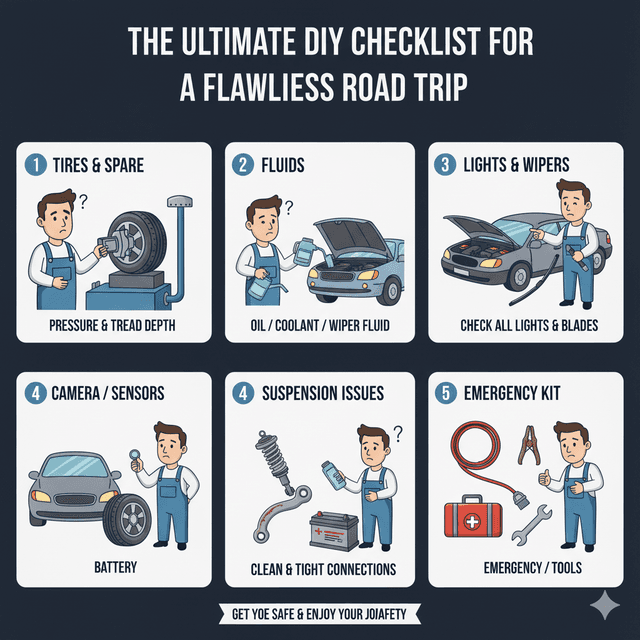
The Ultimate DIY Checklist for a Flawless Road Trip

Drvyn
Content Writer
The open road is calling. Before you answer, ensuring your vehicle is in peak condition is the most important part of your travel plan. While some tasks require a professional, there are many crucial checks you can and should perform yourself. This comprehensive DIY checklist will empower you to take control of your car's readiness, ensuring a safer and smoother journey.
The Foundation: Essential Fluid Checks
Your car's fluids are its lifeblood. Checking them is simple and is the first line of defense against mechanical failure. Make sure your engine is cool before you begin.
1. Engine Oil
How to Check: Remove the dipstick, wipe it clean, re-insert it fully, and then pull it out again. The oil level should be between the 'MIN' and 'MAX' marks.
What to Look For:
- Healthy Oil: Amber or light brown.
- Needs Changing: Dark brown or black.
- Warning Sign: Milky or frothy oil can indicate a coolant leak, a serious issue that needs immediate professional attention.
2. Coolant (Antifreeze)
How to Check: Look at the translucent coolant reservoir tank. The level should be between the 'MIN' and 'MAX' lines. NEVER open the radiator cap when the engine is hot.
What to Look For: The fluid should be brightly colored (often green, pink, or orange). If it's rusty, cloudy, or has particles floating in it, it's time for a system flush by a professional.
3. Brake Fluid
How to Check: Locate the brake fluid reservoir. The level should be between the 'MIN' and 'MAX' lines.
What to Look For: Healthy brake fluid is nearly clear with a slight yellow tint. If it's dark brown or black, it has absorbed moisture and needs to be replaced by a certified mechanic.
4. Windshield Washer Fluid
How to Check: This is the easiest one. Pop the cap on the reservoir (usually marked with a windshield symbol) and top it off. A long trip can kick up a lot of dirt and bugs, so you'll be glad you did.
Traction & Safety: Tire Inspection
Your tires are your only connection to the road. According to recent studies, tire-related issues are a leading cause of roadside breakdowns. Don't skip these steps.
1. Tire Pressure
How to Check: Use a quality tire pressure gauge to check the pressure in all four tires (and the spare!) when they are cold. Inflate them to the pressure recommended on the sticker inside your driver's side doorjamb, not the number on the tire itself.
2. Tread Depth
How to Check: The classic penny test works. Insert a penny into the tread with Lincoln's head upside down. If you can see all of his head, your tread is worn below 2/32 of an inch and it's time for new tires.
3. Visual Inspection
Look for cracks, bulges, or embedded objects in the sidewalls and tread. Uneven wear can indicate an alignment or suspension problem that needs a professional diagnosis.
Be Prepared: Lights, Wipers, and Kits
Check All Lights & Wipers
Have a friend help you check that all exterior lights are working: headlights (high and low beams), taillights, brake lights, and turn signals. Also, check your windshield wipers for cracks or stiffness and replace them if necessary for clear visibility in unexpected weather.
Assemble Your Emergency & Comfort Kits
Having the right gear can turn a potential disaster into a minor inconvenience.
The Must-Have Roadside Emergency Kit:
- Jumper cables
- Flashlight with extra batteries
- First-aid kit
- Tire pressure gauge and portable air compressor
- Basic toolkit (screwdrivers, pliers, adjustable wrench)
- Reflective triangles or flares
- Gloves and paper towels
The Ultimate Comfort Kit:
- Phone chargers and a portable power bank
- Water and non-perishable snacks
- Blankets and pillows
- Sunscreen and sunglasses
- Any necessary medications
The Final Step: You've done your part. For the systems you can't see—like the battery's true health, brake pad life, and suspension integrity—peace of mind comes from a professional. Consider this DIY check the essential first step, and a professional inspection the final seal of approval before your journey.
Enjoyed this article?
Share it with your network
Join the Conversation
Share your thoughts and insights about this article