Turbochargers Explained: How They Work and Their Special Maintenance Needs

Drvyn
Content Writer
In the quest for more power and better fuel efficiency, turbocharged engines have become incredibly common, found in everything from small hatchbacks to large SUVs. But what exactly is a turbocharger, and does it require special care? Understanding how this sophisticated component works is key to keeping your turbocharged car running strong for years to come. Let's dive into the world of turbos.
What is a Turbocharger and How Does It Work?
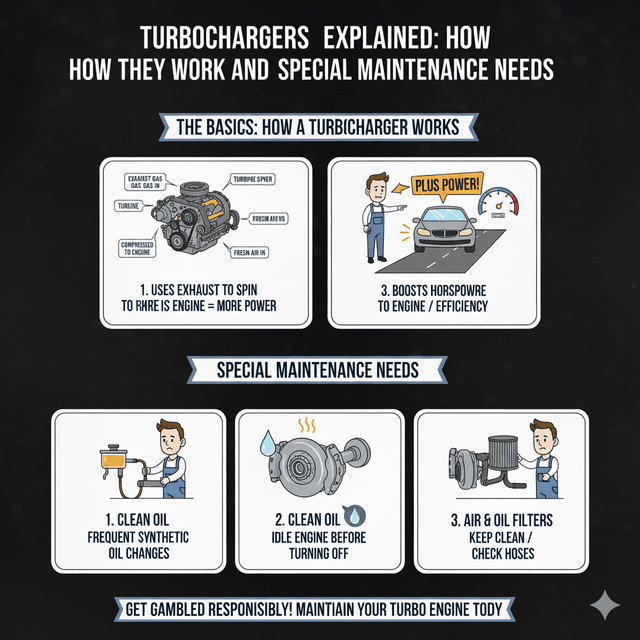
A turbocharger is essentially an air pump that is powered by the engine's own exhaust gases. Its job is to force more compressed air into the engine's cylinders. More air means the engine can also inject more fuel, and the combination of more air and more fuel results in a more powerful explosion in each cylinder. This allows a smaller engine (like a 1.0-litre turbo) to produce the power of a much larger, naturally aspirated engine (like a 1.5-litre), while still offering better fuel economy during normal driving.
A turbo has two main sections connected by a shaft:
- The Turbine: This sits in the path of the hot exhaust gases leaving the engine. As the gases flow out, they spin the turbine wheel.
- The Compressor: The spinning turbine is connected via a shaft to the compressor wheel, which is located in the engine's air intake. As the compressor spins, it sucks in and compresses fresh air before sending it to the engine.
This entire assembly can spin at incredible speeds—up to 250,000 RPM—and operates under extreme temperatures.
Special Maintenance Needs for Turbocharged Engines
Because of these extreme operating conditions, turbocharged engines have a few special maintenance requirements compared to their naturally aspirated counterparts.
1. High-Quality Synthetic Oil is Non-Negotiable
The single most important thing for a turbo's health is clean, high-quality engine oil. The same oil that lubricates your engine also flows through the turbocharger's central housing to lubricate and cool the rapidly spinning shaft. Conventional oil can break down and 'coke' (form hard carbon deposits) under the intense heat, blocking the tiny oil passages and starving the turbo of lubrication, which will quickly destroy it. Always use the full synthetic oil grade specified by your manufacturer and adhere strictly to the oil change interval.
2. The Importance of Warming Up and Cooling Down
While modern turbos are robust, practicing good habits can extend their life. Allow your engine to warm up for a minute before driving off aggressively. This ensures oil has fully circulated to the turbo. Even more important is the 'cool-down'. After a long or hard drive (especially on the highway), let the engine idle for 30-60 seconds before shutting it off. This allows the oil to continue circulating and cool the red-hot turbo down gradually. Shutting the engine off immediately can 'cook' the oil that's left sitting in the hot turbo, leading to carbon buildup.
3. Keep Your Air Filter Clean
The turbo's compressor wheel is a delicate, high-precision component. A dirty or clogged engine air filter can restrict airflow, making the turbo work harder. Worse, a damaged filter could allow dust, sand, or debris to enter the intake and be sucked into the compressor, which would instantly destroy the delicate fins.
4. Watch for Warning Signs
Be alert for signs of a failing turbo, such as a noticeable loss of power, a high-pitched whistling or whining sound from the engine, or blue/grey smoke from the exhaust (indicating the turbo's seals have failed and it's burning oil).
Proper care is key to turbo longevity. A well-maintained turbo engine is both powerful and reliable. Regular, high-quality servicing is the best way to protect your investment. Ensure your turbocharged car gets the expert care it needs by booking your next service with Drvyn's trained technicians.
Enjoyed this article?
Share it with your network
Join the Conversation
Share your thoughts and insights about this article