Foggy or Yellow Headlights? How to Restore Them for Better Night Vision

Drvyn
Content Writer
Have you noticed that your car's headlights don't seem as bright as they used to be? Over time, the clear polycarbonate lenses that protect your headlight bulbs can become cloudy, yellow, and oxidized from constant exposure to the sun's UV rays and road debris. This not only makes your car look old and neglected but, more importantly, it poses a serious safety risk by drastically reducing your visibility at night. Fortunately, this is a fixable problem.
Why Do Headlights Turn Yellow?
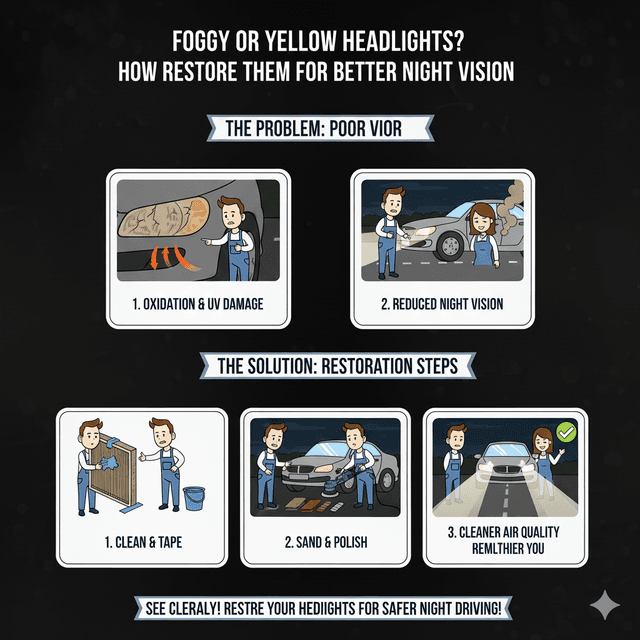
Modern headlight lenses are made of polycarbonate plastic for its durability and impact resistance. From the factory, these lenses are coated with a protective UV-blocking clear coat. Over the years, this protective layer breaks down due to sun exposure, heat from the bulb, and abrasion from road dust. Once this layer is gone, the raw polycarbonate underneath begins to oxidize, creating the hazy, yellowed appearance. This oxidized layer can reduce light output by as much as 70%, making it much harder for you to see the road and for other drivers to see you.
The Solution: Headlight Restoration
Headlight restoration is a multi-step process designed to remove the damaged, oxidized layer of plastic and restore the lens to its original clarity. It's a far more cost-effective solution than replacing the entire headlight assembly, which can be very expensive.
The Restoration Process Explained:
- Cleaning and Masking: The first step is to thoroughly clean the headlight lens and mask off the surrounding paintwork with automotive tape to protect it from the sanding process.
- Wet Sanding: This is the most critical step. A technician uses a series of progressively finer grits of sandpaper (e.g., 800, 1500, then 3000 grit) with water or a lubricant. This carefully sands away the yellowed, oxidized layer of plastic, leaving a smooth but frosted-looking surface.
- Polishing and Compounding: After sanding, a machine polisher with a cutting compound is used to remove the fine sanding marks. This is followed by a finer polish to bring the lens back to a high level of clarity.
- Applying a Protective Sealant: This is the step that ensures the results last. After the lens is perfectly clear, a new, durable UV-protective sealant or clear coat is applied. This new layer protects the freshly polished polycarbonate from the sun, preventing it from quickly turning yellow again. Skipping this step means the headlights will haze over again in just a few months.
DIY Kits vs. Professional Service
While many DIY headlight restoration kits are available, they often provide temporary results because they lack a durable, professional-grade UV sealant. For a long-lasting, crystal-clear finish that truly restores your night vision, a professional service is highly recommended. A professional has the right tools, compounds, and high-quality sealants to do the job correctly and safely without damaging your headlights or paint.
Don't compromise on your safety at night. Clear headlights are essential for seeing pedestrians, obstacles, and road signs in the dark. If your headlights are foggy, it's time to restore them. Book a professional headlight restoration service with Drvyn and see the road ahead clearly and safely.
Enjoyed this article?
Share it with your network
Join the Conversation
Share your thoughts and insights about this article