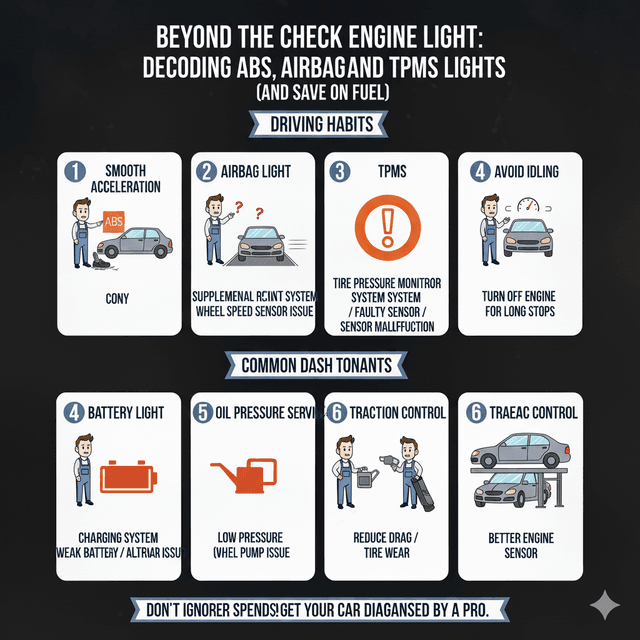
Beyond the Check Engine Light: Decoding ABS, Airbag, and TPMS Lights

Drvyn
Content Writer
We all know the sinking feeling of the Check Engine Light, but modern cars are equipped with a whole constellation of warning lights connected to their advanced safety and monitoring systems. Understanding what these other lights mean is just as critical for your safety. Let's decode three of the most important ones: the ABS, Airbag, and TPMS warning lights.
1. The ABS Warning Light
What it looks like: The letters 'ABS' inside a circle.
What it means: This light indicates a fault in your Anti-lock Braking System. The ABS is a crucial safety feature that prevents your wheels from locking up during hard braking, allowing you to maintain steering control. When this light is on, your regular hydraulic brakes will still work, but the anti-lock function is disabled. This means that in an emergency stop, your wheels could lock, and the car could skid uncontrollably, especially on wet or slippery surfaces.
Common Causes: The issue can range from a faulty wheel speed sensor (the most common cause), a problem with the ABS control module, or a low fluid level in the system. It's essential to have this checked immediately to restore your car's full braking safety features.
2. The Airbag / SRS Warning Light
What it looks like: An icon of a person with a deployed airbag, or the letters 'SRS' (Supplemental Restraint System).
What it means: This is a critical safety warning. When this light is illuminated, it means the car's computer has detected a fault in the airbag system. This does NOT mean the airbags will deploy randomly. It means that in the event of an accident, the airbags may FAIL to deploy. The entire system—including the airbags, seatbelt pre-tensioners, and crash sensors—is deactivated when a fault is present.
Common Causes: A wide range of issues can trigger this light, such as a bad crash sensor, a faulty clock spring in the steering wheel, a wiring issue under the seats, or a problem with the airbag control module itself. Given the life-saving importance of airbags, this light should be addressed by a professional without delay.
3. The TPMS Warning Light
What it looks like: An exclamation mark inside a cross-section of a tire, like a horseshoe.
What it means: This is the Tire Pressure Monitoring System light. It illuminates when one or more of your tires are significantly underinflated—typically 25% below the recommended pressure. Driving on a severely underinflated tire is dangerous; it can overheat, lead to a blowout, and severely compromise handling and braking.
What to do: If this light comes on, find a safe place to pull over and visually inspect your tires. If one looks low, use a portable pump or drive carefully to the nearest petrol station to check and inflate all tires to their correct pressure. If the light stays on after inflating, or if it flashes for a minute upon starting the car and then stays solid, it indicates a malfunction in the TPMS system itself (like a dead sensor battery or a faulty module).
These aren't 'just lights'; they are vital communications about your vehicle's safety systems. Ignoring them means compromising your safety on the road. Our technicians are equipped with advanced diagnostic tools to accurately diagnose and repair these complex systems. If any of these warning lights are on, book a diagnostic check with Drvyn immediately.
Enjoyed this article?
Share it with your network
Join the Conversation
Share your thoughts and insights about this article