City vs. Highway Driving: How Your Commute Affects Your Car's Maintenance

Drvyn
Content Writer
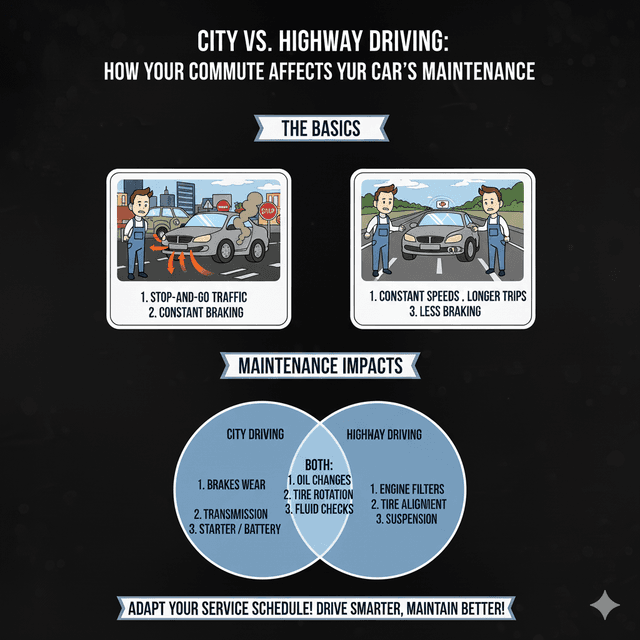
A kilometer is a kilometer, right? Not exactly. When it comes to your car's health and maintenance needs, the type of kilometers you drive matters immensely. The wear and tear from 10,000 kilometers of dense, stop-and-go city traffic is vastly different from 10,000 kilometers of smooth, open highway cruising. Understanding how your daily commute affects your car can help you tailor your maintenance approach for maximum longevity.
The Harsh Reality of City Driving
Most vehicle service schedules consider frequent city driving to be 'severe use'. Here’s why:
1. Brakes and Transmission
Constant acceleration and deceleration put a huge strain on your brakes, leading to much faster wear of brake pads and rotors. For automatic cars, the constant shifting between lower gears generates more heat, which can degrade the transmission fluid more quickly.
2. Engine and Oil
Short trips and stop-and-go traffic are brutal on your engine. The engine rarely reaches its optimal operating temperature, which means moisture and fuel byproducts don't get a chance to burn off and instead contaminate the engine oil. This leads to sludge buildup and requires more frequent oil changes.
3. Battery and Suspension
The frequent starting and stopping, combined with running the AC at low speeds, puts a heavy load on the battery and charging system. City roads, often filled with potholes and speed bumps, put constant stress on your suspension components like shocks, struts, and bushings, causing them to wear out faster.
4. Fuel Efficiency
Your car is least fuel-efficient in city traffic due to constant idling, accelerating, and braking. This means more carbon buildup on internal engine components over time.
The Smoother Life of Highway Driving
Driving primarily on the highway is generally considered 'normal use' and is much easier on your car.
1. Engine and Transmission
Cruising at a steady speed allows the engine to operate at its most efficient RPM and optimal temperature. This burns off contaminants, keeping the engine oil cleaner for longer. The transmission stays in its top gear, generating less heat and wear.
2. Brakes and Suspension
On the highway, your brakes are used infrequently, leading to a very long life for brake pads and rotors. The suspension experiences less jarring impact, extending the life of shocks and other components.
3. Tires
Highway driving results in more even tire wear compared to the constant turning, stopping, and starting of city driving. However, tires do get hotter on long highway runs, making correct tire pressure even more critical.
Tailoring Your Maintenance Schedule
If your driving is 80% or more city-based, you should follow the 'severe' maintenance schedule in your owner's manual. This usually means:
- More frequent oil changes: Don't just follow the kilometer recommendation; consider the time interval (e.g., every 6 months instead of 12).
- More frequent inspections: Have your brakes, suspension, and tires checked more often.
- Filter replacements: Your engine and cabin air filters will get clogged with city dust and pollution much faster.
Conversely, if you are a highway warrior, you can confidently follow the standard service interval, but pay special attention to tire health and the condition of fluids like coolant before long journeys.
Understanding your car's usage is key to smart maintenance. Our service advisors can help you create a personalized maintenance plan based on your unique driving habits. Book a service with Drvyn and let us tailor our care to your car's specific needs.
Enjoyed this article?
Share it with your network
Join the Conversation
Share your thoughts and insights about this article