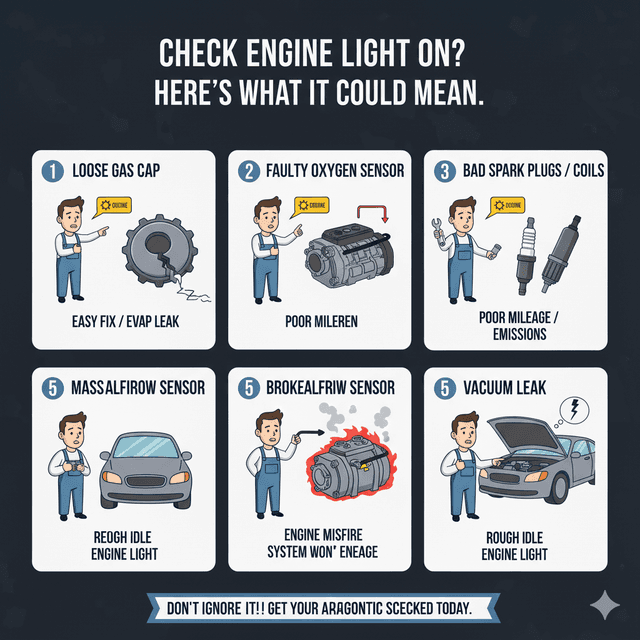
Check Engine Light On? Don't Panic. Here's What It Could Mean.

Drvyn
Content Writer
Few things cause a driver's heart to sink faster than the sudden appearance of the dreaded check engine light. This amber glow on your dashboard is a message from your car's brain, the Engine Control Unit (ECU), and it can signify anything from a ridiculously minor issue to a major problem. While you should never ignore it, panicking isn't necessary. Here's a breakdown of what that light could mean and what you should do.
What is the Check Engine Light?
The check engine light (CEL), officially known as the Malfunction Indicator Lamp (MIL), is part of your car's onboard diagnostics (OBD-II) system. Modern cars have sensors monitoring everything from engine performance and fuel mixture to exhaust emissions. When the car's computer detects a reading from a sensor that is outside its normal range, it stores a 'trouble code' and triggers the light to alert you.
A Steady Check Engine Light: 'Investigate Soon'
If the light comes on and stays on, it indicates a non-emergency fault has been detected. You should get your car checked at your earliest convenience, but it's typically safe to continue driving for the short term. Some of the most common causes for a steady CEL include:
- A Loose or Faulty Gas Cap: This is the simplest and most common fix. A loose cap breaks the fuel system's vapor seal, which is part of the emissions control system. Always try tightening it first (it should click a few times). The light may take a day or two of driving to reset itself.
- Failing Oxygen (O2) Sensor: This sensor measures the amount of unburned oxygen in your exhaust. This data is used to optimize the fuel mixture. A bad sensor hurts fuel economy, increases emissions, and can eventually damage your catalytic converter.
- Worn-out Spark Plugs or Ignition Coils: These parts are crucial for igniting the fuel in your engine. When they fail, it can lead to engine misfires, poor performance, and reduced fuel efficiency.
- Mass Airflow Sensor Failure: This sensor tells the car's computer how much air is entering the engine. This is vital for the ECU to calculate the right amount of fuel to inject. A faulty one can cause stalling, rough idling, and poor acceleration.
A Flashing Check Engine Light: 'Stop Driving Now!'
This is a critical warning that demands immediate action. A flashing or blinking CEL indicates a severe and potentially destructive engine misfire is happening right now. This means unburned fuel is being dumped into the hot exhaust system. This can rapidly overheat and destroy your expensive catalytic converter (a repair that can cost well over Rs. 50,000) and cause internal engine damage. If your check engine light is flashing, you must:
- Reduce your speed immediately and avoid heavy acceleration.
- Find the nearest safe place to pull over and turn off the engine.
- Do not attempt to restart the engine and continue driving.
- Have your vehicle towed to a trusted mechanic for diagnosis.
How is the Problem Diagnosed?
The only way to know the exact cause of the CEL is to have the diagnostic codes read with a professional OBD-II scanner. A code reader will provide a specific fault code (e.g., 'P0301 - Cylinder 1 Misfire Detected') that points a technician in the right direction. However, the code itself is not the diagnosis; it's a symptom. A skilled mechanic uses the code as a starting point to perform further tests and identify the root cause of the problem.
Take the guesswork and anxiety out of your check engine light. Our certified mechanics use advanced diagnostic tools to not only read the codes but also to accurately diagnose the underlying issue. Schedule a diagnostic check with Drvyn today for a clear, honest assessment of your vehicle's health.
Enjoyed this article?
Share it with your network
Join the Conversation
Share your thoughts and insights about this article