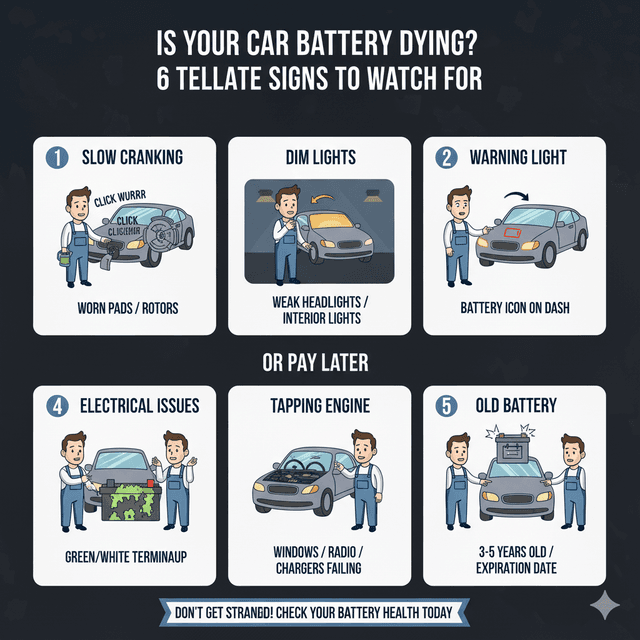
Is Your Car Battery Dying? 6 Telltale Signs to Watch For

Drvyn
Content Writer
A dead battery is the leading cause of breakdown calls worldwide, and it often happens at the most inconvenient times. While a battery can fail suddenly, it usually gives subtle clues that it's nearing the end of its functional life. Recognizing these signs can help you replace it proactively and avoid the stress of getting stranded. Here are six telltale signs that your car battery is on its last legs.
1. Slow, Sluggish Engine Crank
This is the most common and obvious symptom. When you turn the key or press the start button, you hear a sluggish, laboured 'rur-rur-rur' sound instead of the engine turning over briskly and starting. The starter motor requires a huge amount of electrical current to turn the engine over, and a weak battery struggles to provide it. This symptom will be particularly noticeable on a cold morning, as low temperatures reduce a battery's power output.
2. Dim Headlights and Electrical Gremlins
The battery powers all of your car's electronics, from the headlights to the infotainment system. If you notice your headlights are dimmer than usual, especially when the car is idling and then brighten when you rev the engine, it's a strong sign the battery is weak. You might also experience other electrical quirks, like flickering interior lights, a power window that moves very slowly, or a radio that resets itself.
3. The Battery Warning Light is Illuminated
Most dashboards have a warning light shaped like a battery. Contrary to popular belief, this light doesn't just monitor the battery itself; it indicates a problem with the wider charging system. It could mean the battery is not holding a charge, but it could also point to a failing alternator (which is responsible for charging the battery while the engine is running) or a loose or corroded battery cable.
4. A Corroded or Swollen Battery Case
A visual inspection can reveal a lot. Pop the bonnet and look at the battery terminals (the positive and negative posts). If you see a white, blue, or greenish powdery substance, that's corrosion. This buildup can act as an insulator, preventing the battery from charging or discharging effectively. Also, look at the physical shape of the battery case. If it appears swollen, bloated, or cracked, it has likely been damaged by extreme heat or overcharging and needs to be replaced immediately as it can be dangerous.
5. A Pungent, Rotten Egg Smell
If you notice a rotten egg (sulfur) smell coming from under the bonnet, it's a serious red flag. This indicates that the battery is overheating and leaking sulfuric acid gas. This can be caused by an internal short, severe overcharging from a faulty alternator, or physical damage. If you smell this, get your battery inspected by a professional without delay and exercise caution.
6. Old Age: The Inevitable Decline
Car batteries are consumable items; they don't last forever. The average lifespan is about 3 to 5 years. This can be shorter in hot climates like India's, as heat accelerates the chemical degradation inside the battery. If your battery is approaching the 4-year mark, it's wise to have it professionally tested during your regular service, even if you haven't noticed any symptoms yet. Proactive replacement is always better than a sudden breakdown.
Don't wait to get stranded by a dead battery. If you're experiencing any of these signs, it's time for a battery check-up. We can perform a professional load test to determine its true health and check your entire charging system. Book a battery inspection or replacement service with Drvyn and ensure your car starts reliably every time.
Enjoyed this article?
Share it with your network
Join the Conversation
Share your thoughts and insights about this article