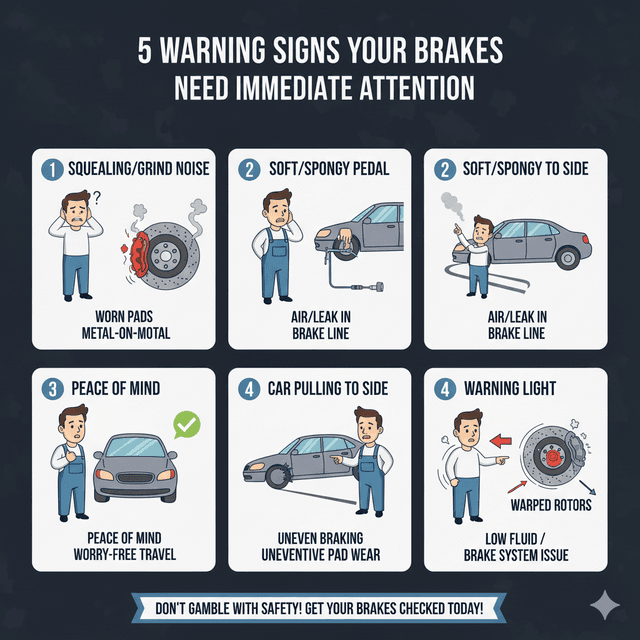
5 Warning Signs Your Brakes Need Immediate Attention

Drvyn
Content Writer
Your car's braking system is arguably its most critical safety feature. According to international road safety studies, brake failure is a factor in a significant percentage of road accidents. Thankfully, brakes rarely fail without warning. Learning to recognize the early signals is essential for any driver. Here are five clear indicators that your brakes need a professional inspection right away.
1. Squealing, Squeaking, or Grinding Noises
This is the classic, and often earliest, sign of brake wear. It's crucial to understand the difference between the sounds.
A high-pitched squeal is typically caused by a small metal wear indicator tab built into your brake pads. It's a purposefully designed warning system. When the pad material wears down to a certain point, this tab makes contact with the spinning brake rotor, creating the squeal. Consider this a friendly reminder to schedule a brake service soon.
A deep, metallic grinding sound is a much more serious alarm. This means your brake pads are completely worn away, and now the metal backing plate of the pad is grinding directly against the metal brake rotor. This is not just a warning; damage is actively occurring. This metal-on-metal contact rapidly destroys the rotor, turning a routine brake pad replacement into a much more expensive job requiring new rotors as well.
2. Vibration in the Steering Wheel or Brake Pedal
If you feel a pulsing or vibrating sensation through the brake pedal or steering wheel when you apply the brakes, especially from higher speeds, it's often a sign of warped brake rotors. Under intense heat from heavy braking, the flat surface of the rotor can become uneven. When the brake pads clamp down on this wavy surface, it creates a shuddering effect. A mechanic can measure this 'rotor runout' with a specialized gauge. While sometimes rotors can be resurfaced, replacement is often the safer, longer-lasting solution.
3. A Soft or 'Spongy' Brake Pedal
Does your brake pedal feel softer than usual, sink towards the floor with little resistance, or require you to press it down much further to engage the brakes? This 'spongy' feeling is a critical safety issue. Brakes operate on a hydraulic system, which relies on incompressible brake fluid. A spongy pedal indicates that air or moisture has contaminated the system, or there's a problem with the master cylinder. Air compresses, fluid doesn't. This means a spongy pedal can lead to a sudden and complete loss of braking power.
4. The Car Pulls to One Side When Braking
When you apply the brakes, your car should slow down in a straight, predictable line. If it consistently pulls to the left or right, you have a problem. This is often caused by a 'stuck' brake caliper. A caliper can get stuck due to rust or debris, causing it to either not apply pressure or not release it. If one side is braking harder than the other, the car will pull, creating a dangerous situation, especially during an emergency stop or on a wet road.
5. The Brake Warning Light is On
This is your car's most direct way of telling you something is wrong. The brake warning light on your dashboard can indicate several issues, from the simple (the handbrake is still on) to the serious, like a drop in hydraulic pressure or dangerously low brake fluid levels. Low fluid often means there's a leak somewhere in the brake lines. Never ignore this light.
Don't gamble with your safety. Brakes wear down gradually, and it can be easy to miss the slow decline in performance. If you're experiencing any of these signs, it's time to act. Our certified mechanics can perform a comprehensive brake inspection to diagnose the issue accurately. Book your professional brake service with Drvyn today for ultimate peace of mind on the road.
Enjoyed this article?
Share it with your network
Join the Conversation
Share your thoughts and insights about this article