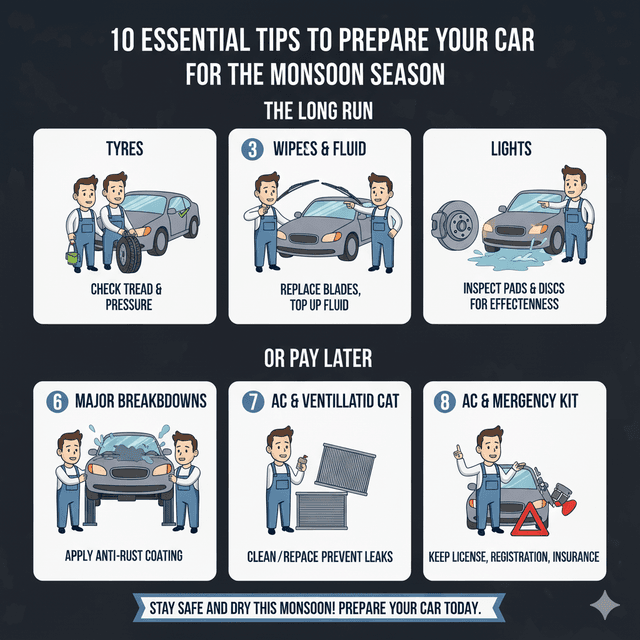
10 Essential Tips to Prepare Your Car for the Monsoon Season

Drvyn
Content Writer
The monsoon season in India brings welcome relief from the summer heat, but it also unleashes challenging and dangerous driving conditions: waterlogged roads, severely reduced visibility, and treacherous, slippery surfaces. Preparing your car for this harsh environment isn't just about convenience; it's a critical aspect of ensuring your safety and protecting your vehicle from long-term damage. Here are 10 essential checks and tips to get your car thoroughly monsoon-ready.
1. Revitalize Your Tires
Good tires are your single most important safety feature on wet roads. Their primary job in the rain is to channel water away from the contact patch to prevent aquaplaning—a dangerous situation where your tires lose contact with the road and skate on a layer of water. Ensure they have adequate tread depth (at least 3mm is recommended for monsoon). Also, maintain correct tire pressure, as both under- and over-inflation can reduce the tire's ability to grip.
2. Install Fresh Wiper Blades
Your wipers will be working overtime. Old, hardened rubber blades will smear water across the windshield instead of clearing it, dangerously impairing your vision. Check the blades for cracks or stiffness and replace them if they leave streaks or make chattering noises. Don't forget to top up your windshield washer fluid with a quality cleaning solution to clear away mud and road grime effectively.
3. Perform a Brake System Health Check
Wet roads significantly increase braking distances. This makes it absolutely essential that your braking system is in perfect working order. A professional should inspect your brake pads for wear, check the discs for scoring, and ensure the brake fluid is not old or contaminated, as this can reduce braking performance.
4. Ensure You Are Visible: Check All Lights
Heavy rain and overcast skies drastically reduce visibility for all drivers. Walk around your car and have a friend help you test every single exterior light: headlights (high and low beams), taillights, brake lights, and indicators. Properly functioning lights are crucial for other drivers to see you and anticipate your movements.
5. Test Your Battery's Strength
The increased use of wipers, lights, the defogger, and the AC blower motor puts a heavy strain on your battery. Damp monsoon weather is notorious for causing weak batteries to finally fail. A professional load test can determine your battery's true health and prevent you from getting stranded.
6. Apply a Protective Wax Coating
A fresh coat of wax does more than just make your car shine. It provides a vital hydrophobic barrier that causes water to bead up and roll off easily. This protects your car's paint from the acidic nature of rainwater and the grime that splashes onto it, helping to prevent rust and long-term paint damage.
7. Inspect Seals and Consider Underbody Protection
Check the rubber seals around all doors, windows, and the boot to ensure they are intact and not cracked. This will prevent water from leaking into the cabin and causing mould or electrical issues. For extra protection, consider getting a professional anti-rust coating applied to your car's underbody, which is constantly exposed to water and mud.
8. Service Your AC System for Clear Vision
Your car's AC is not just for cooling; it's a critical safety tool in the monsoon. It acts as a powerful dehumidifier, essential for quickly demisting the windshield and windows when the humid air fogs them up. Ensure your AC is working efficiently to maintain clear visibility at all times.
9. Upgrade Your Emergency Kit
Getting stranded is always a problem, but it's far more dangerous during a heavy downpour. Enhance your standard emergency kit with monsoon essentials like a sturdy tow rope, a powerful waterproof flashlight, extra drinking water, and a puncture repair kit.
10. Never Underestimate Waterlogged Roads
If you encounter a flooded street, find an alternative route. It's impossible to know the depth or if there are hidden obstacles. Driving through deep water can force water into your engine's air intake, causing a catastrophic failure known as hydrostatic lock. It can also permanently damage your car's sensitive electronic control units (ECUs).
Don't let the monsoon catch you unprepared. A thorough pre-monsoon check-up is the best way to ensure a safe and hassle-free driving experience. Book a comprehensive monsoon-ready service package with Drvyn's experts today.
Enjoyed this article?
Share it with your network
Join the Conversation
Share your thoughts and insights about this article